2026 Top Trends in Robotic Welding Technology What to Expect?
In the rapidly evolving landscape of manufacturing, robotic welding is at the forefront of innovation. This technology is reshaping production processes by offering enhanced precision and efficiency. As we look toward 2026, several key trends are emerging in robotic welding that promise to revolutionize the industry.
One notable trend is the integration of artificial intelligence. Robots will learn from their experiences, improving their performance over time. Enhanced safety features also emerge in this context, as manufacturers prioritize worker well-being. Moreover, the development of more affordable robotic welding systems allows small businesses to invest in automation, thereby bridging the gap with larger competitors.
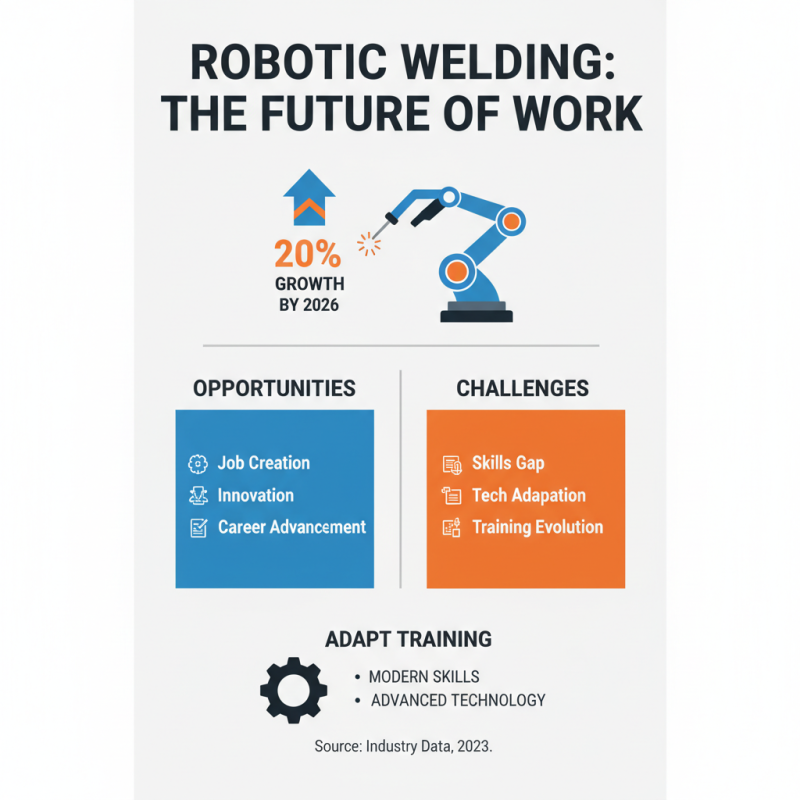
However, challenges remain. As technology advances, workers must adapt to new skill requirements. There may be concerns about job displacement, leading to a need for reskilling initiatives. The path forward in robotic welding is not without its hurdles, but the potential benefits of increased productivity are undeniable. Understanding these trends prepares us for the exciting possibilities of the future.

Emerging Technologies in Robotic Welding for 2026
The landscape of robotic welding technology is set to evolve significantly by 2026. Emerging technologies will greatly enhance automation processes. According to recent industry reports, the robotic welding market is projected to reach $5.5 billion by 2026, revealing a compound annual growth rate (CAGR) of about 12%. Such growth hints at the increasing demand for more efficient and precise welding solutions.
Advanced algorithms will drive smarter robotic systems. Integration of artificial intelligence (AI) enables real-time decision-making. This technology helps identify welding defects instantly, reducing wastage. Furthermore, machine learning will refine processes through data analysis. However, companies must address the learning curve associated with these technologies. It’s essential to invest in training programs to fully utilize AI capabilities.
Collaboration between robots and humans will also make waves. Cobots, or collaborative robots, will work alongside human welders. This approach enhances productivity and safety. Yet, companies must consider the risks of dependency on automation. Striking a balance between human skill and robotic efficiency will remain crucial. Innovation is key, but the challenges require reflection and adaptation in the industry.
Key Trends Influencing Robotic Welding Efficiency and Quality
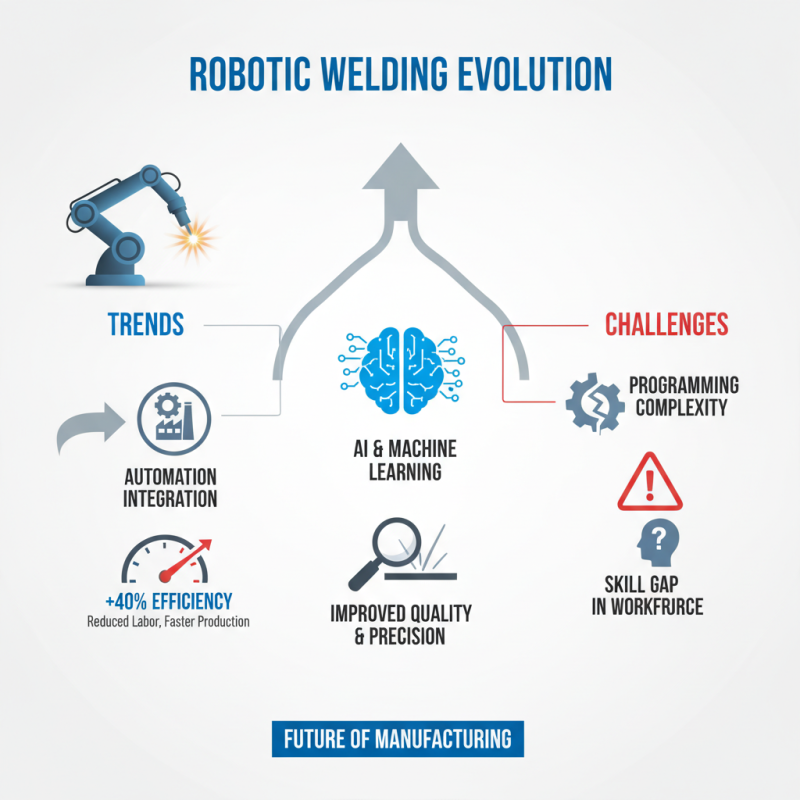
As robotic welding evolves, several key trends are shaping efficiency and quality. Automation integration is a primary driver, boosting productivity. In fact, reports indicate that automation can enhance welding output by up to 40%. This efficiency rise directly correlates with reduced labor costs and increased production speed. However, challenges arise with programming these advanced systems. Many companies still struggle with skill gaps in their workforce.
Data analytics is also influencing robotic welding significantly. Real-time monitoring helps identify defects early. A study revealed that companies utilizing data analytics saw a 30% decrease in rework costs. Yet, many fabricators find it hard to implement these technologies effectively. They often overlook the importance of training and infrastructure.
Moreover, adaptability is becoming crucial. Robots are now designed for versatility, handling various materials and complex geometries. While this enhances flexibility, it can complicate the setup process. Some manufacturers report increased downtime during transitions. Hence, striking a balance between adaptability and efficiency remains a constant challenge in the industry. The road ahead is promising, but hurdles must be addressed to fully capitalize on advancements in robotic welding technology.
Advancements in AI and Machine Learning for Welding Applications
The welding industry is rapidly evolving, driven by advancements in artificial intelligence (AI) and machine learning. These technologies are enhancing efficiency and precision in robotic welding applications. According to a recent report by MarketsandMarkets, the global market for AI in the welding sector is expected to grow at a CAGR of 15.3% over the next five years. This reflects a significant shift towards intelligent manufacturing practices.
AI algorithms can analyze real-time data to improve welding quality. By detecting defects instantly during the welding process, robotics can adjust parameters on-the-fly. These adjustments reduce waste and improve consistency. However, the implementation of these technologies is complex and often costly. Many manufacturers struggle to integrate AI with existing systems. Training staff to adapt to new technologies is also a challenge.
Machine learning models enhance decision-making processes by predicting maintenance needs. Predictive maintenance is becoming crucial in reducing downtime. A study by McKinsey suggests that predictive maintenance can lead to a 20% decrease in maintenance costs. Yet, the reliance on data raises concerns about cybersecurity risks. As companies collect more data, the threat of data breaches increases. Balancing innovation with security remains an ongoing challenge in the industry.
2026 Trends in Robotic Welding Technology
This chart illustrates the expected advancements in robotic welding technology for 2026, focusing on trends in AI and machine learning applications. The data showcases the expected growth in different areas relevant to robotic welding.
Integration of IoT and Automation in Robotic Welding Systems
The integration of the Internet of Things (IoT) and automation is reshaping robotic welding systems. This convergence means machines can communicate, share data, and work together more efficiently. For instance, sensors placed on robots can monitor welding conditions in real time. They can detect issues as they arise, enhancing precision and reducing errors. However, the implementation of these systems can be complex and costly.
Automated systems are not always perfect. Sometimes, the data collected may be overwhelming or underutilized. Companies need to develop strategies to effectively interpret this information. Training staff to understand IoT insights is also crucial. While automation can streamline operations, human oversight remains essential. Balancing technology with human knowledge creates a dynamic workflow.
Moreover, there's the challenge of connectivity. Inconsistent data transmission can lead to problems in real-time monitoring. Ensuring that all components are seamlessly integrated is vital for success. Companies must be prepared to address these issues as they integrate IoT into their welding processes. The continuous evolution of technology demands that businesses remain adaptable and open to change.
2026 Top Trends in Robotic Welding Technology
| Trend |
Description |
Impact on Industry |
Adoption Rate (%) |
Year of Expected Peak |
| Integration of IoT |
Connecting welding machines to the Internet for real-time data monitoring. |
Increased efficiency and predictive maintenance capabilities. |
78% |
2026 |
| Automation Advancements |
Enhanced automation to reduce human intervention in welding operations. |
Higher precision and reduced operational costs. |
85% |
2026 |
| AI & Machine Learning |
Utilization of AI for optimizing welding parameters and processes. |
Improved weld quality and reduced defects. |
70% |
2025 |
| Collaborative Robots |
Use of robots that can safely work alongside human welders. |
Enhanced workflow and safety in manufacturing environments. |
60% |
2026 |
| Remote Monitoring |
Ability to monitor and control welding operations from remote locations. |
Increased flexibility and faster response to issues. |
65% |
2026 |