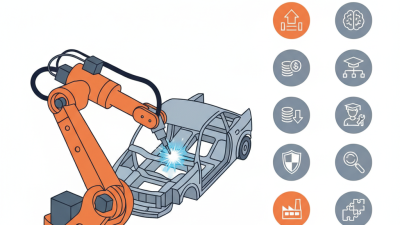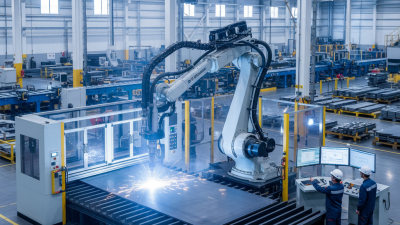

Choosing the best robot parts is rarely about finding the cheapest component. Global buyers must match each part with the robot’s task, environment, and service demands.
A factory assembling metal housings may need high-load reducers, precise servo motors, and heat-resistant cables. A packaging line may depend more on lightweight grippers, vision sensors, and fast controller communication. These differences matter. They affect accuracy, downtime, maintenance costs, and worker safety. Experienced buyers usually review torque ratings, cycle life, operating temperature, connector standards, and documented test results before placing an order. Supplier traceability also deserves close attention. Clear part numbers, batch records, warranty terms, and technical drawings can prevent costly mistakes across borders.
There is no universal answer.
OEM components often provide strong compatibility and stable documentation. Compatible aftermarket robot parts may offer better availability or lower total cost. However, uncertain materials, incomplete specifications, or weak quality control can create serious problems. I have seen buyers focus on unit price and overlook calibration support, replacement lead times, or import packaging. That approach can look efficient at first. It may not remain efficient.
Reliable sourcing requires evidence, not confident promises. Buyers should request samples, inspect certificates, confirm software compatibility, and test parts under realistic loads. Independent engineering advice can also reveal hidden risks. Even experienced teams make imperfect choices. The goal is not to eliminate every uncertainty, but to identify it early and manage it responsibly. This guide examines the main types of robot parts, their practical strengths, and the questions global buyers should ask before selecting a supplier.

Robot Parts: Types, Functions, and Key Differences
For global buyers, robot parts should match the machine’s task, load, and working environment. A robotic arm may need servo motors for smooth, accurate movement. Stepper motors suit simpler positioning tasks with lower speed demands. Gearboxes increase torque and reduce output speed. Their ratios also affect precision, noise, and energy use.
End effectors perform the actual handling work. Grippers hold boxes, metal pieces, or fragile components. Suction tools work well with flat, clean surfaces. Welding heads, cutting tools, and inspection cameras require different mounting systems. Sensors provide feedback about position, pressure, temperature, or distance. Controllers process this information and coordinate movement. Cables and connectors seem minor, but poor shielding can cause unstable signals.
The key differences involve compatibility, accuracy, payload, lifespan, and maintenance needs. A high-torque joint may be unsuitable for a lightweight inspection arm. A low-cost sensor can also create expensive errors during continuous production. Buyers should check voltage, communication protocol, mounting dimensions, shaft size, protection rating, and replacement availability. For dusty workshops, sealed parts usually offer safer long-term operation.
Part selection is not always perfect. I have seen teams choose impressive specifications while overlooking cable length or software compatibility. That mistake delays installation. Test samples under realistic temperatures and loads before placing large orders. Keep drawings, test records, and supplier quality documents together. Ask for measurable tolerances, not vague promises. Small details matter.
Robot Parts: Types, Functions, and Key Differences
The chart compares representative engineering reduction-ratio ranges used in robot transmission parts. Higher ratios provide greater torque multiplication in a compact package, while lower ratios generally support higher speed and simpler mechanical integration. Actual specifications vary by design, load, duty cycle, and application.
High reduction, low backlash, and compact construction. Commonly considered for precision joints.
Balanced speed, torque density, efficiency, and durability for many robot axes.
High shock-load resistance and strong torque capacity for demanding motion systems.
Lower-cost transmission options suitable for flexible layouts and moderate precision requirements.
What Is the Best Type of Robot Parts for Global Buyers?
How to Match Robot Parts with Specific Applications
Global buyers should choose robot parts by application, not by appearance or price. A warehouse gripper needs reliable grip, low weight, and fast cycling. A welding joint needs heat resistance, stable positioning, and protected cables. These requirements are not interchangeable.
Start with the working environment. Record payload, motion range, cycle time, dust level, humidity, and available power. Then match each part to those conditions. A high-torque motor may seem attractive, but it can waste energy on a small pick-and-place arm. A sealed connector suits wet processing areas. For clean facilities, smooth surfaces and easy-to-clean materials may matter more than maximum strength.
Compatibility deserves careful attention. Check mounting dimensions, voltage, communication protocols, safety limits, and replacement procedures. Ask for technical drawings, test data, material specifications, and inspection records. Reliable suppliers should explain tolerances clearly and support traceable quality checks. Do not rely only on a product photograph. Start small. Pilot testing can reveal hidden problems. A part may perform well in a test cell but overheat during continuous production. I once underestimated maintenance access during a specification review. That mistake delayed a replacement. Buyers should examine failures honestly, prepare spare parts, and confirm local service options before scaling orders.
Material choice strongly affects a robot part’s service life, weight, and motion accuracy. Aluminum parts are light, corrosion-resistant, and practical for moving arms or external frames. Steel offers higher strength, but it adds weight and may need surface protection in humid environments. Engineering plastics reduce noise and friction. However, they can deform under heat or constant pressure.
During sourcing tests, we check parts under repeated movement, vibration, and changing temperatures. A gear may perform well in a clean workshop but fail when dust enters its teeth. Sealed bearings usually last longer in demanding conditions. Stainless steel fasteners also help when robots operate near moisture. Small details matter.
Carbon-fiber components can reduce weight and improve acceleration, yet they often cost more and require careful inspection. Precision-machined parts usually provide better dimensional consistency than basic molded parts. Still, perfect accuracy on paper does not guarantee reliable field performance. Assembly quality, lubrication, and maintenance schedules can change the result.
Global buyers should request material certificates, hardness data, load ratings, and test records. They should also confirm tolerances and replacement availability. We have seen buyers choose the strongest material, then discover that the part was too heavy for the motor. That mistake is easy to overlook. Real operating conditions deserve more attention than impressive specifications.
Global buyers rarely need the most advanced robot part. They need a part that fits, communicates, and remains available across borders. Compatibility begins with mechanical dimensions, mounting patterns, load limits, connector types, and software protocols. A replacement joint may look identical but use a different encoder signal or voltage. Small details matter.
Standards provide a useful technical baseline. Buyers should request drawings, tolerance data, material specifications, and test reports before placing an order. Safety-related components may require alignment with standards such as ISO 10218, ISO/TS 15066, or IEC 60204-1, depending on the application. An IP rating also matters in dusty workshops or humid production areas. However, a standard reference does not automatically prove full system compatibility. Engineering review is still necessary.
Supply reliability depends on more than price. Confirm production capacity, minimum order quantities, spare-part policies, packaging quality, and delivery records. Clear serial numbers and batch traceability can simplify inspections and warranty discussions. Regional voltage requirements and import documentation should be checked early. A cheaper part may create expensive downtime. Supply stability matters.
In procurement reviews, teams often focus too heavily on the initial quotation. That approach is understandable, but incomplete. A modular part with common interfaces may cost slightly more while reducing future maintenance risks. Still, “universal” compatibility can be overstated. Buyers should test one sample under real operating conditions before approving larger quantities. The test may reveal an inconvenient truth.
| Robot Part Type | Primary Function | Key Compatibility Checks | Common Technical Standards | Typical Operating Range | Global Supply Considerations | Best Use Case for Global Buyers |
|---|---|---|---|---|---|---|
| Servo Motors | Provide precise rotary motion and positioning. | Rated voltage, torque, speed, shaft size, encoder type, mounting pattern, and controller protocol. | IEC 60034, IEC 61800-5-1, CE-related electrical safety requirements, and local EMC rules. | Common industrial ratings range from approximately 50 W to several kW; operating temperatures often range from 0°C to 40°C unless specified otherwise. | Confirm voltage and feedback configuration before shipment; protect against moisture and shock during transport. | Multi-axis machinery, robotic joints, automated positioning systems, and conveyor modules. |
| Gearboxes and Reducers | Increase output torque and reduce motor speed. | Reduction ratio, allowable backlash, rated torque, peak torque, flange dimensions, shaft orientation, and lubrication requirements. | ISO 6336 for gear calculation principles, ISO 1328 for gear accuracy, and applicable machinery safety requirements. | Reduction ratios commonly range from about 3:1 to more than 100:1; allowable backlash depends on the gear design and precision class. | Check lubrication compatibility, mounting orientation, service life data, and spare-seal availability in the destination market. | Robotic arms, rotary tables, pick-and-place equipment, and high-load positioning axes. |
| Linear Actuators | Convert rotary or hydraulic energy into controlled linear movement. | Stroke length, retracted length, load capacity, duty cycle, mounting clevis, speed, limit switches, and ingress protection. | IEC 60529 for IP ratings, IEC 60204-1 for machinery electrical equipment, and ISO 12100 for risk assessment. | Typical stroke lengths range from roughly 50 mm to 1,000 mm; duty cycles vary significantly by motor, screw, and load. | Specify metric or imperial mounting dimensions, connector type, replacement parts, and customs classification in advance. | Grippers, lifting platforms, adjustable fixtures, packaging lines, and mobile robotic systems. |
| Robot Controllers | Coordinate motion, feedback, safety functions, and external equipment. | Supported motor type, axis count, input voltage, encoder interface, communication protocol, software version, and safety I/O. | IEC 60204-1, IEC 61508 principles where applicable, ISO 10218 for industrial robot safety, and IEC 61131-3 for programmable control concepts. | Industrial controllers commonly support 24 V DC control circuits and may use single- or three-phase AC power, depending on system size. | Software localization, cybersecurity updates, remote support, spare availability, and regional electrical requirements are critical. | Integrated production cells requiring synchronized motion, diagnostics, and machine-to-machine communication. |
| Encoders and Position Sensors | Measure position, speed, direction, or angular displacement. | Resolution, absolute or incremental output, electrical interface, shaft or hollow-bore size, accuracy, and alignment tolerance. | IEC 61131-2 for industrial control equipment interfaces, IEC 60529 for enclosure protection, and relevant EMC standards. | Common resolutions range from hundreds of pulses per revolution to several million counts per revolution after interpolation. | Keep connector pinouts and communication protocols consistent; provide anti-static packaging and documented calibration data. | Closed-loop servo systems, robotic joints, AGVs, CNC equipment, and precision inspection machinery. |
| End-of-Arm Tooling | Grip, weld, cut, inspect, dispense, or handle workpieces. | Robot wrist flange, payload, center of gravity, pneumatic or electrical utilities, tool-change interface, and workpiece geometry. | ISO 9409-1 for mechanical interfaces, ISO 10218 for robot-system safety, and ISO 12100 for machinery risk reduction. | Payload and gripping force vary widely; pneumatic systems often use approximately 0.4–0.8 MPa compressed air. | Use standardized flange dimensions where possible and confirm replacement jaws, seals, sensors, and utility fittings. | Flexible automation where one robot must perform multiple handling or process operations. |
| Safety Sensors and Switches | Detect people, open guards, unsafe access, or hazardous operating conditions. | Sensing distance, response time, safety category or performance level, reset logic, wiring, and environmental resistance. | ISO 13849-1, IEC 62061, IEC 61496 for electro-sensitive protective equipment, and IEC 60204-1. | Many control circuits use 24 V DC; required safety performance depends on the complete machine risk assessment. | Certification documents, test records, wiring diagrams, and local conformity requirements should accompany each shipment. | Robot cells, automated lines, guarded machinery, collaborative work areas, and material-handling systems. |
| Cables and Cable Carriers | Transmit power, signals, data, and utilities while supporting repeated movement. | Bending radius, torsion rating, conductor size, shielding, connector layout, travel length, cycle life, and chemical resistance. | IEC 60227 or IEC 60245 for cable construction, IEC 60529 for protection levels, and applicable EMC requirements. | Continuous-flex cables are selected according to motion profile; minimum bending radius is commonly specified as a multiple of cable diameter. | Use clear cable markings, standardized connectors, moisture-resistant packaging, and documented bend-life test results. | Rotary joints, moving axes, drag-chain systems, mobile robots, and high-cycle automated equipment. |
What Is the Best Type of Robot Parts for Global Buyers?
Choosing robot parts is not only about the lowest purchase price. A part should match the robot’s load, movement range, control system, and working environment. Poor compatibility can create vibration, downtime, and expensive redesigns. Buyers should check material quality, dimensional tolerance, operating temperature, and replacement availability. Clear technical drawings and inspection records also improve purchasing confidence.
Tips: Compare total cost, not unit price. Include shipping, installation, maintenance, energy use, and possible production delays. Request a sample or small trial order before committing to large quantities. Check warranty terms, documentation quality, and expected service life. A slightly more expensive part may reduce frequent replacements. However, higher price does not always mean better performance.
Long-term value depends on practical support. Reliable suppliers should explain testing methods, batch control, and compatibility limits. They should also provide consistent specifications for future orders. Standardized parts can simplify repairs across different machines and locations. Still, standardization may reduce flexibility in specialized applications. Even a careful checklist can miss hidden costs, such as custom tooling or slow technical responses. Buyers should record failure rates and maintenance time after installation. Those details often reveal more than a sales quotation.
© 1999-2025 The Lincoln Electric Company