How to Choose the Best Robotic Welding Cells for Your Needs?
In the evolving landscape of manufacturing, robotic welding cells have become indispensable. According to a report by MarketsandMarkets, the global robotic welding market is projected to reach $4.3 billion by 2025. Industries are increasingly turning to robotic solutions to enhance productivity and accuracy. However, choosing the right robotic welding cells is crucial.
Expert Mark Smith emphasizes, "Selecting the appropriate robotic welding cells can elevate efficiency but requires careful analysis." His insight highlights the need to assess production requirements thoroughly. Companies often underestimate factors such as integration with existing machinery and the types of materials used. These elements can significantly impact performance and costs.
Making informed choices helps avoid common pitfalls. Many businesses rush into decisions, leading to mismatched capabilities and longer setup times. Evaluating specific welding tasks, workspace layout, and future scalability can prevent these issues. In a competitive market, selecting the ideal robotic welding cells is essential for sustainable growth.
Importance of Robotic Welding Cells in Modern Manufacturing Operations
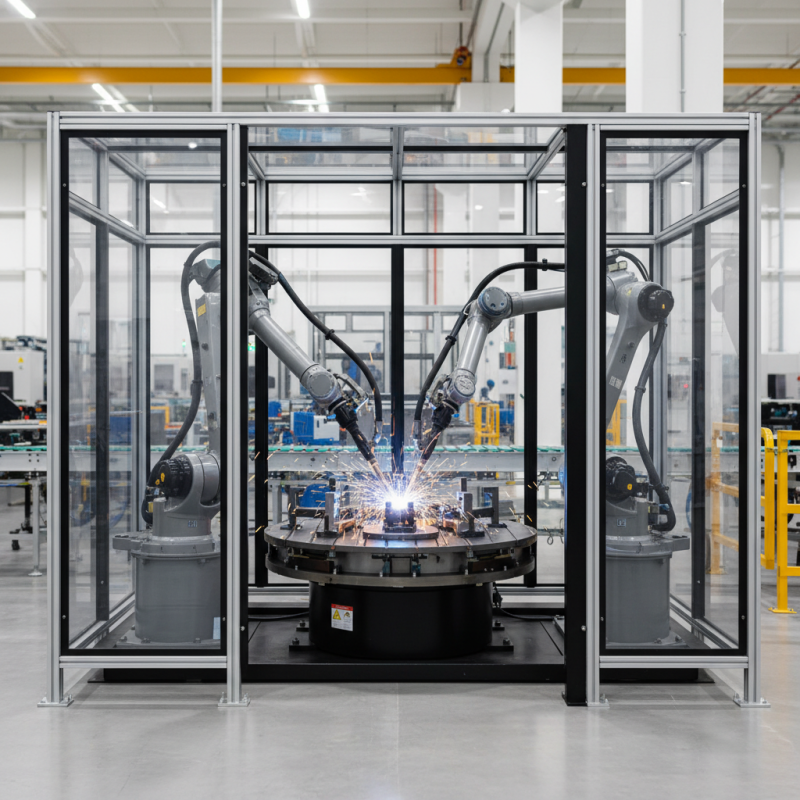
Robotic welding cells have become essential in modern manufacturing. These systems improve efficiency and precision in the welding process. They help reduce human error and lower production costs. A well-designed robotic welding cell can dramatically enhance productivity. However, not all cells are the same. Understanding specific needs is crucial.
The adoption of robotic welding is important for staying competitive. Industries such as automotive and aerospace benefit greatly from these systems. Automation allows for faster production cycles. But challenges still exist. Some manufacturers struggle with integration. The learning curve can be steep. Flexibility is often needed, as projects can change unexpectedly.
Investing in robotic welding requires careful consideration. The wrong choice can lead to inefficiencies. Assessing the layout and workflow of your facility is vital. Training for staff must not be overlooked. Even advanced systems can fail if operated incorrectly. There is always room for improvement in these setups. Continuous evaluation helps in maximizing their potential.
How to Choose the Best Robotic Welding Cells for Your Needs?
| Feature |
Importance |
Considerations |
| Flexibility |
Allows adaptation to various welding tasks and parts |
Assess range of parts and materials to be welded |
| Speed |
Increases production output |
Evaluate cycle time for efficiency |
| Precision |
Ensures high-quality welds |
Consider alignment and repeatability metrics |
| Integration |
Facilitates seamless operation with existing systems |
Check compatibility with current manufacturing setup |
| Cost |
Affects overall investment and ROI |
Analyze budget versus benefits |
Key Factors to Consider When Selecting Robotic Welding Technology
Choosing the right robotic welding cell involves understanding various critical factors. One essential aspect is the type of materials to be welded. Different materials, such as steel, aluminum, or stainless steel, require specific welding techniques and equipment. According to a report by the International Institute of Welding, robotic systems can increase efficiency by up to 30%. However, this improvement depends on correctly matching the process to the material.
Another key factor is the cell's flexibility and scalability. Many manufacturers face changing production demands. A rigid system may lead to inefficiencies. Flexibility allows for adjustments in production volumes and product designs without crucial downtime. Moreover, a recent industry study indicated that 40% of companies regret investing in inflexible robotic systems. This highlights the need to prioritize adaptability when making purchasing decisions.
Finally, consider the integration of software and controls. Intuitive software can reduce setup times and enhance operational efficiency. A survey found that 60% of operators struggle with complex interfaces. Thus, user-friendly technology can significantly impact overall productivity. Selecting robotic welding cells is not just about technology; it requires foresight and careful evaluation of future needs.
Key Factors for Selecting Robotic Welding Cells
Evaluating the Performance Metrics of Robotic Welding Cells
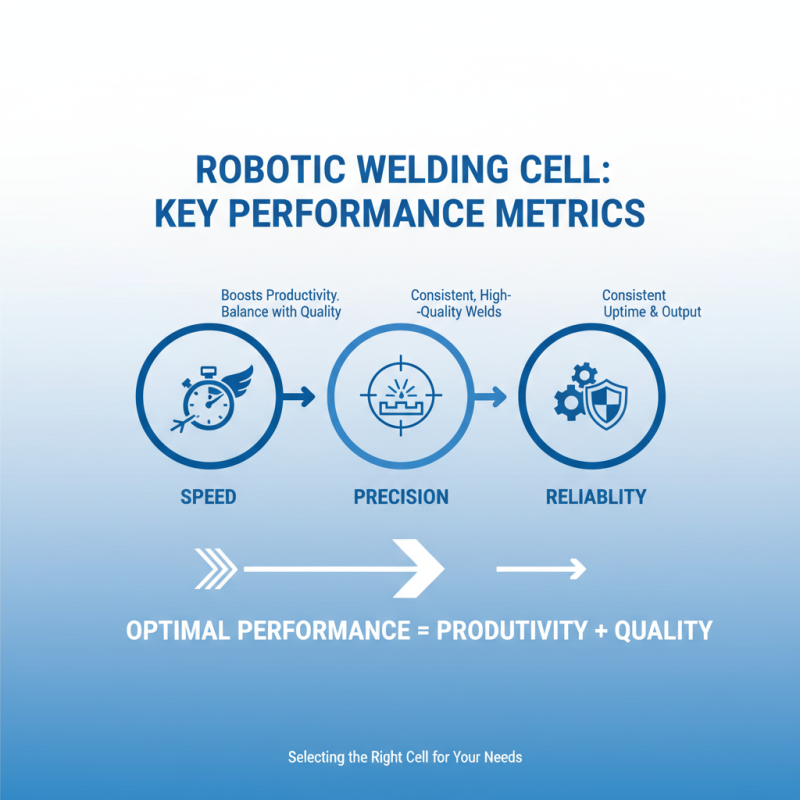
When selecting a robotic welding cell, performance metrics are essential. These metrics indicate how well a cell can meet your specific needs. Key factors include speed, precision, and reliability. A faster welding operation can significantly boost productivity. However, speed shouldn't compromise quality. Balancing both is crucial for long-term success.
**Tip:** Always assess your production volume. High-volume tasks may require cells with advanced automation. But smaller projects may benefit from simpler technologies.
Accuracy is the backbone of a successful welding cell. High precision leads to better joint integrity. This reduces rework and waste. Some cells might excel in speed but falter in precision. It’s important to avoid making a choice based solely on one metric.
**Tip:** Request a demonstration. Watching a cell in action can reveal its true capabilities. Examine its efficiency in real-world scenarios rather than theoretical specifications.
Consider ease of use too. Complex programming may lead to slower adoption by your team. If operators struggle, it could hurt your overall output. Reflect on the learning curve required for your staff. As you weigh options, think about how the technology integrates with your existing processes.
**Tip:** Gather feedback from your team. Their insights might highlight overlooked challenges or strengths. This will help you make a more knowledgeable choice.
Cost Analysis: ROI of Investing in Robotic Welding Solutions
Investing in robotic welding solutions can yield substantial returns. However, calculating the ROI is complex. It involves initial costs, maintenance, and training expenses. Many overlook ongoing costs. If operators need significant training, this expense can add up quickly. Also, consider power and materials. Energy consumption might vary, which impacts long-term costs.
Analyzing cost-to-benefit ratios is crucial. Robotic welding cells can increase production speed by up to 30%. This can lead to higher output and shorter lead times. Yet, is the increase worth the initial investment? Each situation is unique. Evaluate your specific needs. Some businesses may see a rapid payback period, while others might wait years.
Maintenance is another key factor. Regular upkeep ensures efficiency but can add to costs. Failing to plan for downtime can strain production. Reflect on your workflow. Will automation integrate smoothly? Assess your existing processes. Identifying potential bottlenecks helps in making the right decision. Investing without thorough analysis can lead to financial strain.
Future Trends in Robotic Welding Systems and Their Impact on Productivity
The landscape of robotic welding systems is rapidly evolving. Industry reports suggest that the adoption of these systems is projected to grow by over 15% annually. This growth is driven by advancements in technology, automation, and the need for higher productivity. Companies are adopting robotic cells to remain competitive. They improve quality and reduce downtime, but the initial setup and training can be challenging.
Future trends indicate that artificial intelligence and machine learning will play pivotal roles. These technologies allow robotic systems to adapt and optimize processes in real-time. Reports show that organizations leveraging such innovations could increase productivity by 30%. However, integration can be complex. There’s a risk of over-reliance on automation, which might lead to skills gaps among workers. Training programs must evolve alongside technology to prevent these issues.
The push for sustainability is another key trend. Many industries are focusing on eco-friendly practices. Robotic systems can help reduce waste and improve energy efficiency. Yet, the cost of environmentally friendly technologies can be high. Companies must weigh the long-term benefits against the initial investment. Proper planning is crucial to maximize returns while minimizing potential setbacks.