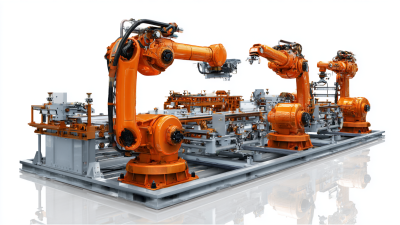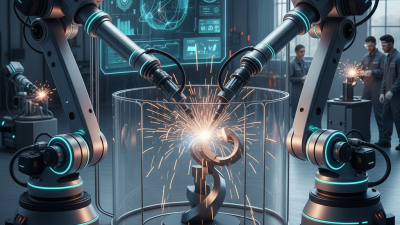

Choosing the right robotic welding solutions for your business is crucial. With numerous options available, it can feel overwhelming. Each industry has unique needs that require careful consideration. For instance, some projects demand high precision, while others focus on speed and efficiency.
When exploring robotic welding solutions, think about your specific applications. Are you working with thin materials or thicker sections? Understanding the depth of your requirements helps narrow down your choices. Additionally, budget constraints play a significant role. Some solutions may be advanced but not suitable for all businesses.
Not every robotic welding system is created equal. Some might promise rapid returns on investment yet fail to deliver. It's essential to research thoroughly. Test run a few models if possible. Each robotic welding solution has its strengths and weaknesses. Evaluate them against your operational goals. As you navigate through the options, reflect on past experiences. What worked? What didn’t? This introspection can guide you toward a decision that aligns perfectly with your needs.
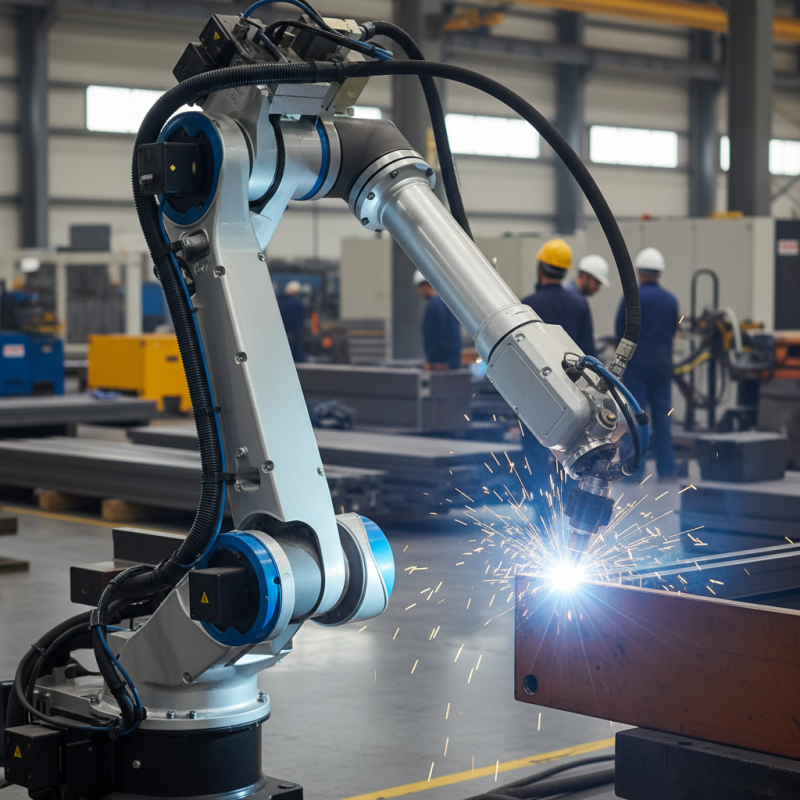
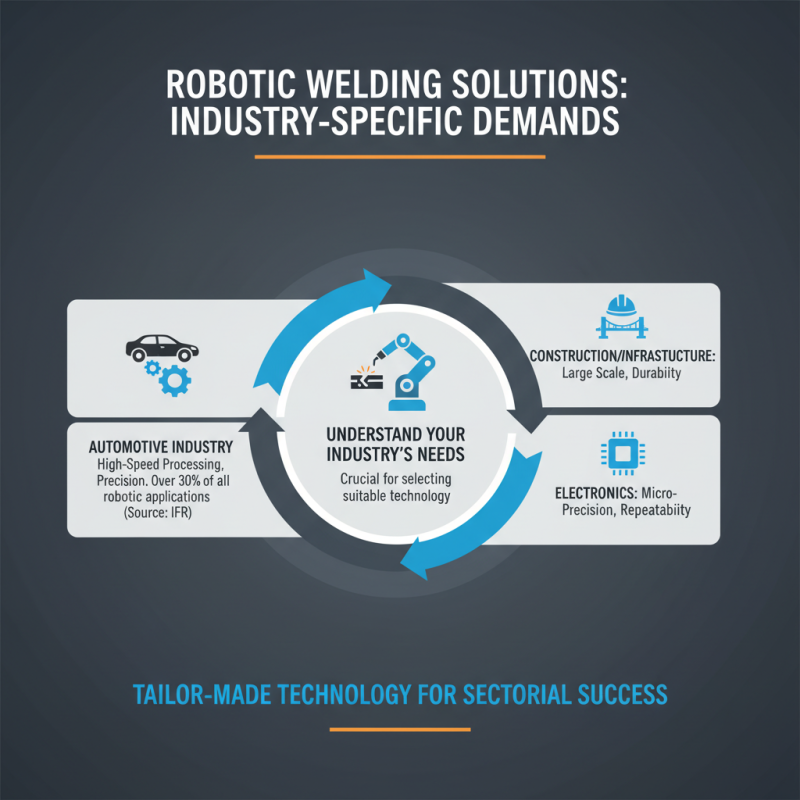
When considering robotic welding solutions, understanding your industry’s specific requirements is crucial. Different sectors have varying demands. For example, the automotive industry often requires high-speed processing with precision. A report by the International Federation of Robotics states that automotive manufacturing accounts for over 30% of all robotic applications. This highlights the importance of selecting suitable technology tailored for your sector.
A critical factor is the material types you will work with. Stainless steel, aluminum, and titanium all present unique challenges for welding robots. Tips: Assess the compatibility of your chosen robot with these materials. Inconsistencies in performance can lead to higher operational costs. Regularly evaluating the effectiveness of your processes could reveal underlying issues.
Moreover, your facility's layout impacts the selection of welding solutions. For instance, a compact workspace might limit the choice of larger robots. Carefully plan your welding area to ensure seamless integration. Tips: Create a detailed floor plan. Analyze workflow efficiency to identify potential bottlenecks. Considering these aspects will help mitigate future adjustments and improve overall productivity.
When evaluating robotic welding technologies, it's essential to consider their unique benefits. For example, MIG welding robots excel in versatility. They are suitable for various materials, offering flexibility in production. According to recent industry reports, MIG robots can improve efficiency by up to 30%. This can lead to significant cost savings over time.
TIG welding robots, on the other hand, are known for precision. They provide cleaner welds and are ideal for thin materials. However, they may require more setup time. Data indicates that while TIG robots improve quality, they can be 20% slower than MIG options. It’s a trade-off that needs careful thought.
Finally, consider the collaborative robots (cobots). They work alongside humans, enhancing safety and productivity. Reports suggest that implementing cobots can boost output by 25%. Yet, they may be limited in handling heavy-duty tasks. Each welding technology has its strengths and weaknesses, which requires reflection on your specific needs.
| Technology Type | Advantages | Ideal Applications | Cost Efficiency |
|---|---|---|---|
| Arc Welding Robots | High precision, flexibility in applications, suitable for various materials | Automotive, Construction | High initial investment but low operating costs |
| Resistance Spot Welding Robots | Fast cycle times, minimal heat affected zone | Body fabrication in automotive | Moderate cost, high efficiency for large volume |
| Laser Welding Robots | Very high precision, less distortion | Aerospace, Electronics | High cost but excellent for specific applications |
| TIG Welding Robots | Fine control over weld pool, excellent for thin materials | Artistic metalwork, Aerospace | Higher operational cost but offers exceptional weld quality |
| Cobot Welding Solutions | User-friendly, collaborative with human workers | Small batch production, Repair shops | Lower setup costs, increases flexibility |
When evaluating robotic welding solutions, cost-effectiveness is paramount. A 2021 report from the National Institute of Standards and Technology found that 55% of manufacturers considered initial costs as their main factor. However, focusing solely on purchase price can be misleading. Long-term value often lies in productivity, reduced labor costs, and enhanced quality.
Operational efficiency is a key area to analyze. Research indicates that robotic systems can boost productivity by up to 50% compared to manual welding. This increase often leads to reduced cycle times and less waste. Maintenance costs can also weigh heavily. Inconsistent data shows maintenance can make up 5-10% of total operational costs annually, necessitating careful evaluation of service contracts.
Moreover, the learning curve of new technology can't be ignored. Transitioning to a robotic system may initially slow down production. A study from the Robotics Industries Association indicates companies often underestimate training costs, which can account for 10% of the system's total investment. These hidden expenses can complicate the overall cost analysis and should be factored into any decision-making process.
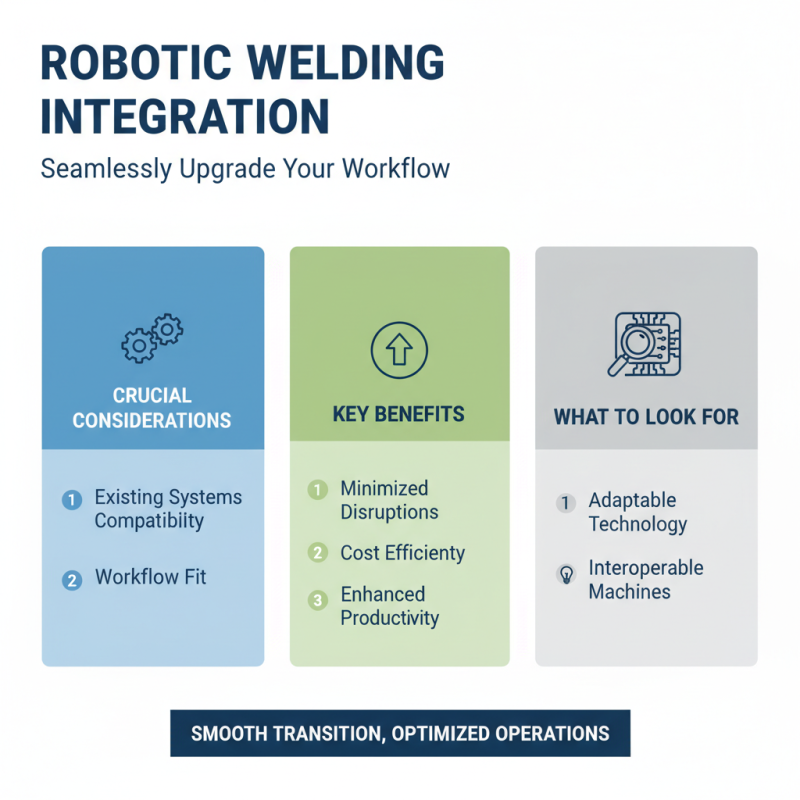
When choosing robotic welding solutions, integration with existing systems is crucial. Evaluate how well the new technology can fit into your current workflow. A seamless integration minimizes disruptions. Look for systems that can work alongside existing machines. Compatibility issues can lead to frustration and unexpected costs.
Assessing the technology's communication protocols is essential. Does it use industry-standard interfaces? This ensures it can connect with your software and equipment. In some instances, modifications may be required. Be prepared for potential challenges. Not every robotic welding solution will easily mesh with your setup. Knowing this upfront can save time and resources.
Testing the integration on a small scale is wise. Pilot programs can reveal unforeseen difficulties. Observe the performance metrics carefully. Are there delays or errors? Gathering this data will inform your final decision. Balancing innovation with practicality is key. Achieving a smooth integration can make all the difference in optimizing your production capabilities.
The landscape of robotic welding is evolving rapidly. According to a recent report from industry analysts, the global robotic welding market is projected to grow by over 10% annually through 2025. This growth is fueled by increasing demand for automation in manufacturing. Many companies are turning to robotic solutions to enhance productivity and reduce costs. However, not all robotic systems are the same.
In evaluating robotic welding options, it’s crucial to consider the technology trends shaping the industry. For instance, the integration of artificial intelligence in welding robots is becoming more prevalent. AI-driven systems can learn from their environments and enhance their performance over time. This may lead to initial investment challenges. Companies must balance costs and the potential for higher future returns.
Additionally, as sustainability becomes a core focus, robotic welding solutions are adapting. New technologies are designed to use less energy and produce fewer emissions. Yet, the transition can be rocky. Businesses need to ensure that their current infrastructures can support these advancements. Keeping a close eye on market changes and industry benchmarks is vital for effective decision-making.
© 1999-2025 The Lincoln Electric Company