Why is Robotic Automation Essential for Modern Businesses?
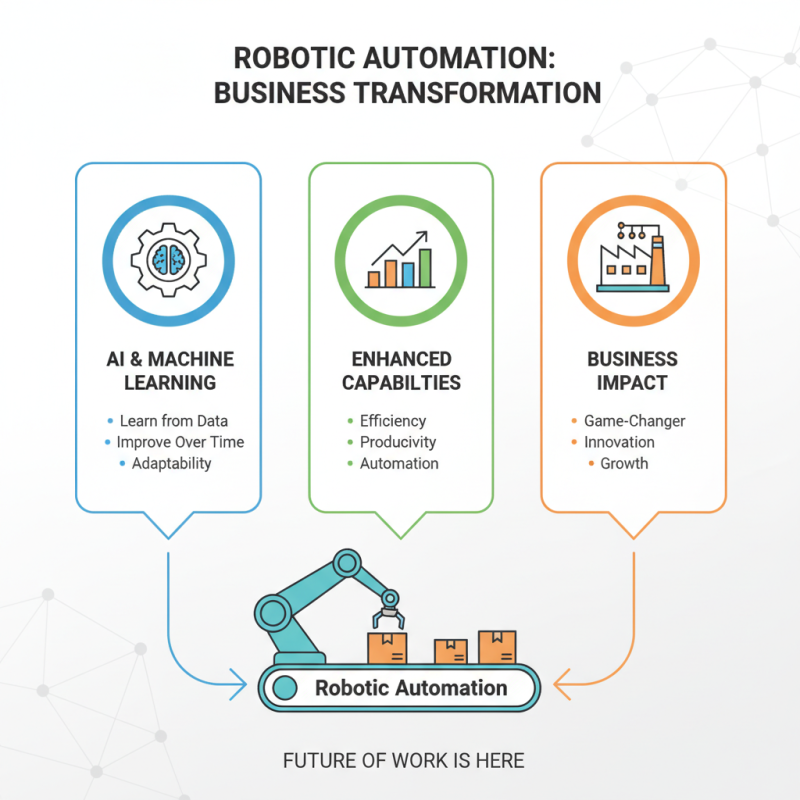
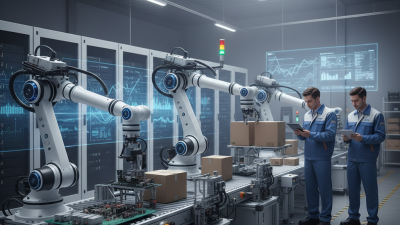
In today's competitive landscape, robotic automation is becoming essential for businesses. Companies need to adapt quickly. As demands shift, robotic automation offers a flexible solution. It streamlines operations efficiently, saving time and reducing costs.
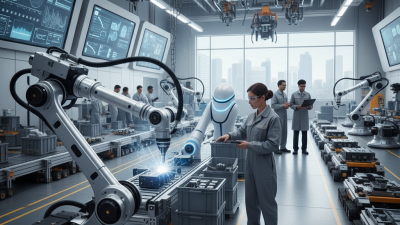
Many tasks that once required human effort can now be automated. Think of repetitive data entry or assembly line work. Robotic automation takes over these mundane jobs. This shift allows human workers to focus on strategic tasks. However, there's a challenge. Not all employees welcome this technology. Some fear job loss, leading to resistance. Organizations must address these concerns carefully.
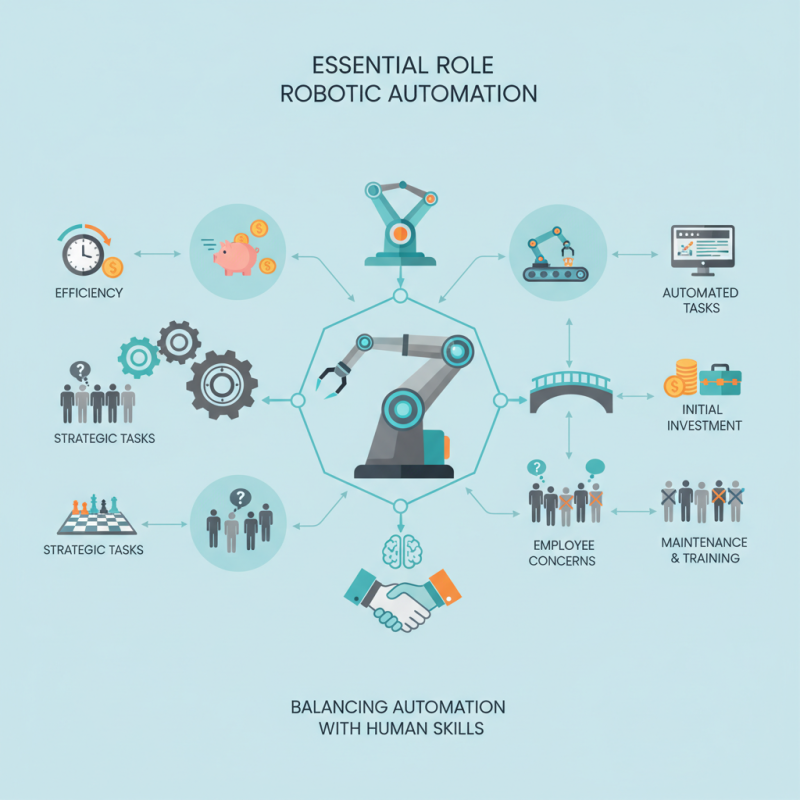
Moreover, implementing robotic automation isn't without its flaws. While it increases speed, initial setup can be expensive. Maintenance and training also require investment. Reflection on these costs is vital. Balancing automation with human skills is essential in the modern business environment.
The Rise of Robotic Automation in Global Industries
The rise of robotic automation is reshaping global industries. Many sectors, from manufacturing to healthcare, are utilizing robots to enhance efficiency. These machines perform repetitive tasks with high precision. They can work around the clock, increasing output significantly. Factories that implement robotics report fewer errors and less waste. The potential for cost reduction is enticing. However, the initial investment can be daunting for smaller companies.
Adopting robotic automation also raises concerns. Workers fear job displacement as machines take over their roles. Training employees to work alongside robots is essential. It requires a shift in mindset from traditional roles to collaborative environments. Not all industries benefit equally; some may experience labor shortages or skill mismatches. The effectiveness of automation depends on proper implementation and context.
Despite the complexities, it's clear that robotic automation is here to stay. Companies are embracing it to stay competitive in a global market. But this transformation invites deeper reflection. How do we balance technology with human labor? As industries evolve, workers must adapt too. Successful integration will rely on ongoing dialogue between employers and employees.
Cost Efficiency and Labor Savings Through Automation
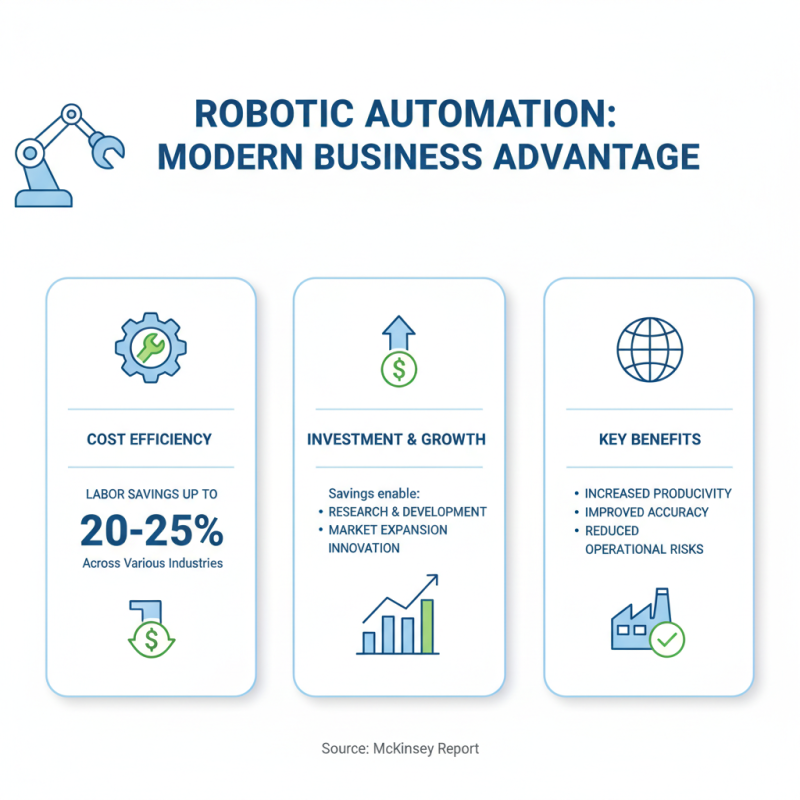
Robotic automation has become an indispensable tool for modern businesses. Companies often seek cost efficiency and labor savings. According to a recent report by McKinsey, automation could save up to 20-25% in labor costs across various industries. These savings allow businesses to invest in growth opportunities.
Implementing robotic processes can reduce the time required for repetitive tasks. For example, automating data entry can cut processing times by up to 80%. This means employees can focus on higher-value activities, like strategic planning or customer relations. However, not every implementation is smooth. Some companies face challenges in employee retraining and adaptation to new systems. There can be resistance to change, which needs to be addressed.
On the flip side, it's crucial to remember that automation isn't a one-size-fits-all solution. Not all tasks are ideal for robots. Certain complex customer interactions benefit from human empathy and understanding. The key is finding the right balance, where automation complements human effort rather than replaces it entirely.
Enhancing Productivity: Automation in Manufacturing Sectors
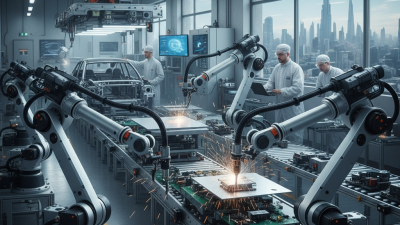
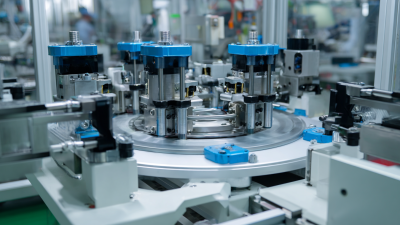
In the manufacturing sectors, robotic automation has transformed how businesses operate. It streamlines processes and reduces human error. Machines can work tirelessly, producing goods faster than a human ever could. This speed can lead to increased output. However, speed alone is not enough. Many companies struggle to integrate automation effectively.
Robots can handle repetitive tasks with precision. For example, they assemble components or perform quality checks. This allows human workers to focus on more complex problems. Yet, this transition is not always smooth. Employees may resist changes, fearing job loss. Training becomes essential to ensure everyone adapts to new technologies.
Additionally, maintenance of robotic systems is crucial. Without proper upkeep, machines can malfunction. This can halt production and lead to delays. Businesses must balance automation with human oversight. Embracing robotic automation is vital, but the implementation must be thoughtful and gradual. There are lessons to learn from early adopters. Addressing concerns about job displacement is also necessary. By doing so, firms can maximize both productivity and employee satisfaction.
Why is Robotic Automation Essential for Modern Businesses? - Enhancing Productivity: Automation in Manufacturing Sectors
| Sector |
Productivity Increase (%) |
Cost Reduction (%) |
Error Reduction (%) |
Implementation Time (Months) |
| Automotive |
30 |
25 |
50 |
12 |
| Electronics |
25 |
20 |
30 |
10 |
| Food Processing |
20 |
15 |
40 |
8 |
| Pharmaceutical |
35 |
30 |
20 |
15 |
Future Trends: Automation's Impact on Job Markets and Workforce Skills
Robotic automation is reshaping job markets and workforce skills. A recent McKinsey report predicts that by 2030, up to 375 million workers may need to switch job categories due to automation. This shift highlights a pressing need for upskilling. As machines take over routine tasks, humans must focus on complex problem solving and creative tasks.
To adapt, companies should invest in training programs. Providing workshops can enhance essential skills. Employees should learn to work alongside technology. The World Economic Forum notes that 85 million jobs might be displaced, but also 97 million new roles could emerge. This suggests that the future workforce will need to be flexible and adaptable.
Tip: Encourage a culture of continuous learning in your organization. Offer online courses and resources. Another important aspect is fostering collaboration between human workers and automated systems. This synergy is vital for success in the evolving job landscape. Reflect on current capabilities and areas needing improvement. The future demands innovation, not stagnation.